
A practical, search-friendly guide for project owners, designers, contractors and buyers.
Sports court fencing is easy to treat as a finishing item, but it affects how the court plays, looks and operates every day.
A well-planned system keeps balls in play, separates players from traffic, guides visitors toward the right entrances and gives the venue a finished appearance. A poorly planned one creates different problems: dead corners, rattling panels, awkward gates, blocked sightlines and repeated repair work.
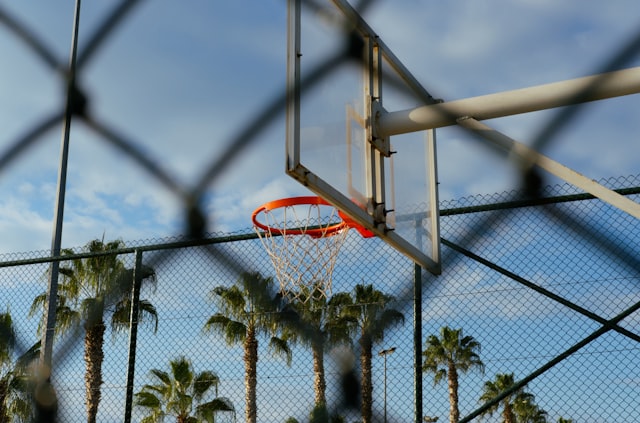
A court fence is part of the playing environment
That is why the best specification starts with the way the venue will be used rather than with a catalogue page. The right design balances ball containment, player safety, visibility, durability, maintenance and the character of the surrounding site.
Begin with the sport, the users and the site
Before choosing mesh or posts, define which sports will be played and how often the court will be used. Fast ball sports usually need stronger impact resistance and careful control of openings near goals, baselines and shooting areas.
Community courts also need to tolerate unsupervised use, bicycles leaning against the fence and the occasional hard impact outside normal play. A club venue may place more value on clean sightlines, quieter performance and a finish that matches nearby buildings.
Usage matters as much as sport because a court open twelve hours a day will age differently from one used for two evening sessions each week. The site adds another layer, including wind exposure, salt air, drainage, ground conditions, nearby homes and access for maintenance vehicles.
Choose height by risk zone, not by habit
Uniform height around the entire court is simple to quote, but it is not always the most efficient design. The areas behind goals, baskets and court baselines usually receive more ball impacts and may need taller fencing or separate ball-stop netting.
Sidelines can sometimes use a lower enclosure where there is generous run-off space and little risk to nearby people or property. For many community projects, heights in the range of about three to four metres are common, while higher sections are often used behind goals or at exposed boundaries.
Those figures are a starting point rather than a universal rule, because local codes, governing-body guidance and the court layout take priority. It is also worth checking whether trees, lighting columns, spectator areas or neighbouring roofs create unusual ball escape routes.
Select a mesh system that suits play and maintenance
Chain link mesh remains a practical choice for many sports courts because it follows uneven ground, handles repeated impacts and can be repaired in local sections. Its flexible surface is especially familiar around tennis courts and recreational pitches, although loose tension can lead to movement and noise.
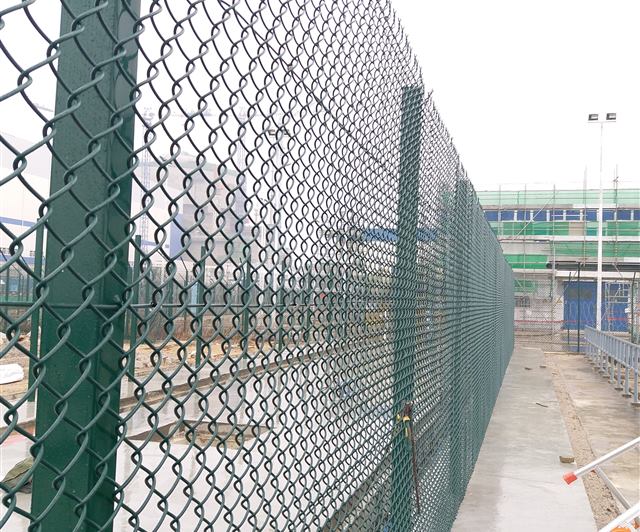
Welded wire panels offer straighter lines, a more architectural appearance and predictable panel dimensions for modular installation. They should be matched with posts and fixings that can absorb impact without allowing the panel edges to work loose.
Twin-wire or reinforced welded panels may be useful in high-use areas where rigidity and resistance to deformation are priorities. A smaller opening helps contain small balls and discourages climbing, but it can add weight, cost and wind resistance.
Rather than choosing mesh by price alone, compare aperture, wire diameter, panel stiffness, edge treatment, repair method and long-term availability of matching components.
Posts, rails and foundations carry the real load
Mesh attracts most of the attention, but the supporting structure determines whether the enclosure stays straight after years of wind and ball impacts. Post section, wall thickness, spacing and embedment should be considered as one system rather than as independent numbers.
Taller fences produce greater leverage at ground level, and closely spaced mesh can increase the wind load transferred into every post. Corner posts, gate posts and height-transition posts often need more capacity than intermediate posts because they receive tension or concentrated loads.
Top and bottom rails can improve alignment and stiffness, while rail-free systems may give a cleaner appearance when the panel design provides enough rigidity. Foundation design should respond to soil, frost, drainage and local engineering requirements instead of relying on one footing size for every location.
Design for player safety at every contact point
Players notice the details that are easiest to overlook on a drawing. Exposed wire ends, sharp panel edges, projecting bolts and poorly placed braces can turn an ordinary collision into an injury.
Fixings should face away from the playing side where practical, and caps or covers should remain secure under weather and vibration. The bottom edge needs particular attention because gaps can trap a foot, allow balls to escape or collect litter.
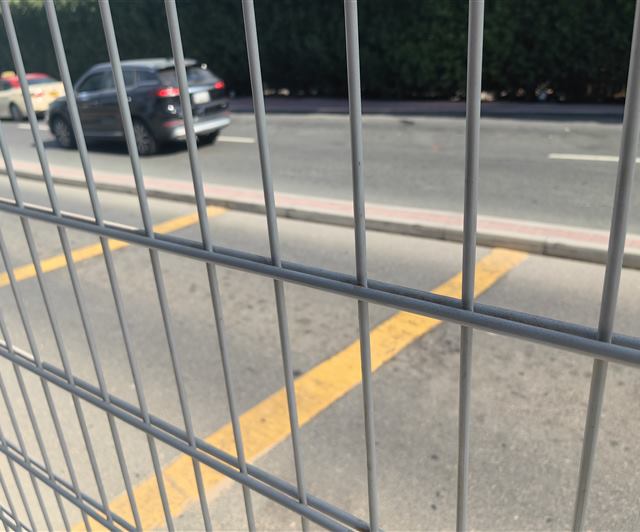
Bracing should not project into run-off zones, and gate leaves should not open into the path of active play. If rebound play is expected, the internal face should be as even as possible so the ball does not strike irregular posts or fittings.
Make gates work for people, equipment and emergencies
A court can have excellent fencing and still be frustrating to operate if the gates are too narrow, badly located or difficult to latch. At least one entrance should suit routine users, while a wider maintenance gate may be needed for cleaning machines, nets, goals or emergency access.
Gate positions should connect naturally to paths and parking areas without forcing visitors to walk around the enclosure or cross landscaping. Self-closing hardware can help control access, but the closing force and latch height must remain convenient for the intended users.
Thresholds should remain flush and well drained so wheelchairs, maintenance trolleys and players do not meet an unexpected trip point.
Specify a finish for the actual climate
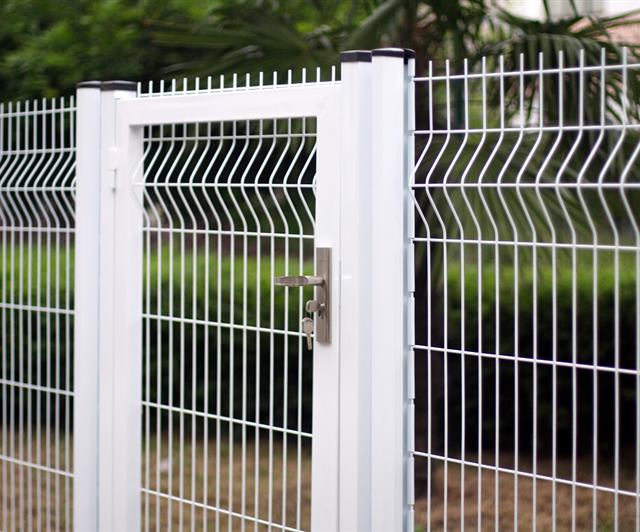
A durable sports court fence normally depends on both corrosion protection and a consistent decorative finish. Hot-dip galvanizing protects steel through a zinc coating, while powder or PVC coatings can add colour and another barrier against the environment.
The coating system should be specified as a complete process, including surface preparation, zinc layer where required, coating type, colour and inspection method. Coastal sites, humid tropical regions, swimming-pool surroundings and industrial atmospheres deserve more attention than mild inland locations.
Cut edges, drilled holes and site welds are vulnerable points because they can interrupt a factory-applied protective layer. Colour also affects how the fence sits in the landscape, with dark green and black often appearing less visually dominant than bright metallic finishes.
Different sports create different details
- Tennis court fencing needs to contain a small, fast ball while preserving a clear view for players, coaches and spectators.
- Basketball courts often need stronger protection behind the baskets, where repeated impacts are concentrated and people may gather outside the court.
- Football and small-sided soccer pitches benefit from taller ball-control zones behind goals, with gates placed away from shooting lines where possible.
- Multi-use games areas must accommodate different ball sizes and patterns of play, so robust lower panels and adaptable line-of-sight planning are valuable.
- Padel enclosures are more specialised because parts of the surrounding structure influence play, making dimensional accuracy and a smooth internal face especially important.
Turn the design into a clear procurement package
Many quotation problems begin with incomplete information rather than with the product itself. A useful request should include a dimensioned layout, total fence length, height schedule, number and size of gates, preferred mesh, finish, colour and delivery location.
Photographs, levels and notes about slopes or retaining walls help the supplier identify transitions that may otherwise appear only during installation. The quotation should state what is included, such as posts, panels or mesh rolls, rails, clamps, bolts, caps, gate hardware and spare parts.
It should also separate factory supply from foundations, installation, electrical work and local lifting equipment when those items are not part of the offer. For international projects, packaging dimensions, container loading, corrosion protection during transit and component identification are part of the product, not administrative details.
Inspect installation details before handover
Even a strong fence system can look poor if post lines wander, panel steps are inconsistent or gate leaves do not meet cleanly. The installation team should establish control lines and finished levels before drilling anchors or pouring foundations.
Post spacing must match the manufactured panels or the intended chain link tension, with planned allowances at corners and gates. Coating damage should be repaired with an approved method, and swarf from drilling should be removed before it begins to rust on finished surfaces.
Gates should be tested through their full movement, including latches, closers, drop bolts and clearances above the finished ground. A final walk along both sides of the fence is one of the simplest ways to find sharp points, missing caps, loose fixings and blocked drainage.
A better fence begins with a better brief
The most successful sports court fencing projects rarely depend on one impressive component. They succeed because mesh, posts, foundations, gates, coatings and installation details have been designed to work together.
Start with the sport and the site, map the high-risk zones, decide how people and equipment will move, and then select the fence system. If you are requesting a project quotation, provide the court layout, dimensions, required heights, gate schedule, finish, location and expected use.
That information allows a manufacturer to price the real project, identify missing details and propose a system that can be installed with fewer surprises. Good sports court fencing should quietly do its job for years, keeping play contained without distracting from the game.